
Sports Science
The Needs Analysis: The Cornerstone of S&C Practice
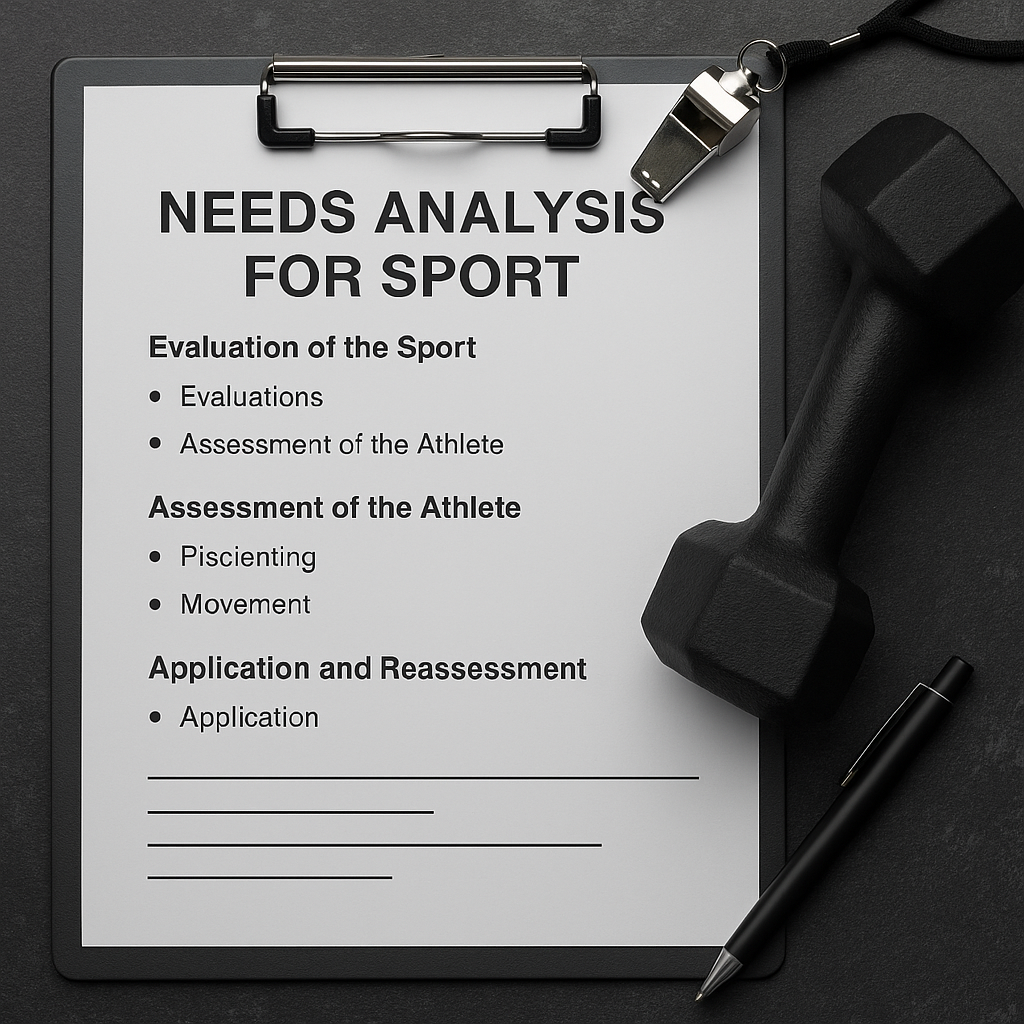
In short: A needs analysis is the cornerstone of evidence-based strength and conditioning — a three-phase process of evaluating the sport's demands, assessing the athlete against them, and applying and continually reassessing the findings — that turns generic programming into training which genuinely transfers to performance and reduces injury risk.
A needs analysis is the cornerstone of evidence-based strength and conditioning. It bridges sport science theory and applied coaching, letting you design training that matches the physiological, biomechanical and technical demands of a given sport (Bompa and Buzzichelli, 2019). Skip it, and your programming risks being generic — failing to develop the qualities that actually determine performance or reduce injury risk.
Defining the needs analysis
A needs analysis is a systematic assessment of the specific demands of a sport, alongside the capabilities and limitations of the athlete. It identifies key performance determinants such as energy system contribution, movement patterns, strength and power demands, and injury risks (Haff and Triplett, 2016). It runs in three phases: evaluation of the sport, assessment of the athlete, and integration of the findings into a periodised plan. Each phase informs the next, so training priorities rest on objective data rather than assumption (Turner, 2014).
Phase 1: Evaluate the sport
The first phase analyses the sport itself — its movement patterns, intensity profile and key physiological systems. That means identifying the primary energy pathways, the frequency and duration of efforts, and the mechanical actions success requires (Stone et al., 2007). Elite rugby, for instance, demands repeated high-intensity bouts of strength and power under fatigue, supported by robust aerobic recovery (Gabbett, 2016). A 100-metre sprinter needs something very different: near-maximal neural drive, stiffness optimisation and specific rate of force development capacities (Moir et al., 2020).
By quantifying these demands through time–motion analysis, GPS data and performance metrics, you can decide which physical qualities to prioritise — acceleration, strength endurance, reactive power. That becomes the blueprint for sport-specific training that transfers to competition (Jeffreys and Moody, 2016).
Phase 2: Assess the athlete
Once you know the sport's demands, you measure the athlete against them. This involves physical testing (strength, power, speed, aerobic fitness), movement screening, and analysis of anthropometrics and injury history (Comfort and McMahon, 2015). The goal is to find the gaps between where the athlete is and the ideal performance model. If a force–velocity profile shows strong maximal force but limited velocity, training should target high-speed strength and plyometric qualities (Morin and Samozino, 2016).
This phase isn't only physiological. Psychological readiness, recovery capacity and positional demands all matter too (Taylor et al., 2021). Performance is multifactorial — physical, technical, tactical and mental — and a good assessment respects that.
Phase 3: Apply, then reassess
A needs analysis is only worth anything if its findings shape the training. The information gathered informs exercise selection, periodisation and load management (Haff and Triplett, 2016). In practice, that might mean targeted mesocycles built around an athlete's weak links or upcoming competition demands — a footballer entering pre-season, say, focusing on deceleration strength and repeated sprint ability, both flagged as critical (Harper and Kiely, 2018).
Reassessment matters just as much. Regular re-testing shows whether the training is working and lets you adapt plans dynamically. That cycle — hypothesis, intervention, observation, refinement — is the scientific method applied to coaching (Turner, 2014).
Why it matters
A robust needs analysis underpins athlete safety, performance efficiency and professional accountability. It prevents overtraining and injury by aligning load with readiness, and it ensures time in the gym directly supports competition. In high-performance environments, where marginal gains decide outcomes, this systematic approach is what separates competent coaches from exceptional ones. It turns S&C from routine programming into a precise, adaptive, evidence-driven discipline.
References
- Bompa, T.O. and Buzzichelli, C. (2019) Periodization: Theory and Methodology of Training. 6th ed. Champaign, IL: Human Kinetics.
- Comfort, P. and McMahon, J.J. (2015) 'Strength and Conditioning for Athletic Performance', Journal of Strength and Conditioning Research, 29(3), pp. 574–586.
- Gabbett, T.J. (2016) 'The training–injury prevention paradox: should athletes be training smarter and harder?', British Journal of Sports Medicine, 50(5), pp. 273–280.
- Haff, G.G. and Triplett, N.T. (eds) (2016) Essentials of Strength Training and Conditioning. 4th ed. Champaign, IL: Human Kinetics.
- Harper, D.J. and Kiely, J. (2018) 'Damaging nature of decelerations: asymmetry, braking, and performance implications', International Journal of Sports Physiology and Performance, 13(9), pp. 1175–1183.
- Jeffreys, I. and Moody, J. (eds) (2016) Strength and Conditioning for Sports Performance. London: Routledge.
- Moir, G.L., Sands, W.A. and Stone, M.H. (2020) 'The influence of strength on speed and power development', Sports Medicine, 50(2), pp. 215–231.
- Morin, J.B. and Samozino, P. (2016) 'Interpreting power–force–velocity profiles for individualized and specific training', International Journal of Sports Physiology and Performance, 11(2), pp. 267–272.
- Stone, M.H., Stone, M. and Sands, W.A. (2007) Principles and Practice of Resistance Training. Champaign, IL: Human Kinetics.
- Taylor, K.L. et al. (2021) 'Monitoring athlete readiness and load management: a framework for S&C practitioners', Strength and Conditioning Journal, 43(4), pp. 45–55.
- Turner, A. (2014) 'Strength and conditioning for soccer players', Strength and Conditioning Journal, 36(4), pp. 1–13.
Want to go deeper? The Level 4 Strength & Conditioning course.
View the course →Frequently asked
What is a needs analysis in S&C?
A systematic assessment of a sport's specific demands alongside an athlete's capabilities and limitations. It identifies performance determinants like energy system contribution, movement patterns, strength and power demands, and injury risks.
What are the three phases?
Evaluation of the sport, assessment of the athlete, and integration of the findings into a periodised plan. Each phase informs the next so priorities rest on objective data, not assumption.
Why does a needs analysis matter?
Without one, programming risks being generic and failing to develop the qualities that actually determine performance or reduce injury. It underpins athlete safety, performance efficiency and professional accountability.
How do you evaluate a sport's demands?
Through time–motion analysis, GPS data and performance metrics — quantifying movement patterns, intensity profile, effort frequency and duration, and the mechanical actions success requires.
Is a needs analysis a one-off?
No. Regular reassessment lets coaches check whether training is working and adapt dynamically — a cyclical process that mirrors the scientific method of hypothesis, intervention, observation and refinement.